

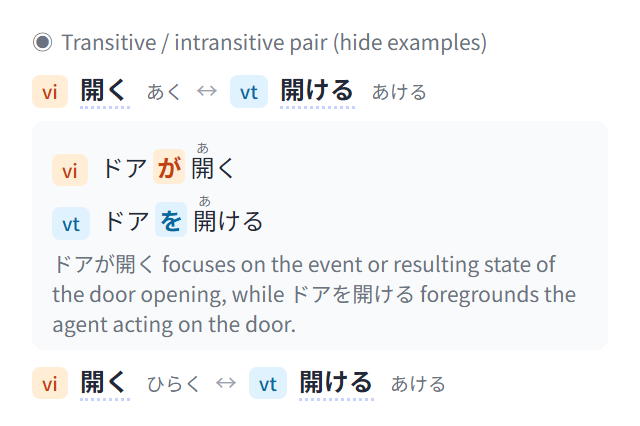
Transitive / intransitive
「開ける」or「開く」?
Android


Scan it with your Android phone to install, or search for “Tomoshi” on Google Play.
iOS


Scan it with your iPhone or iPad camera to install, or search for “Tomoshi” in the App Store.
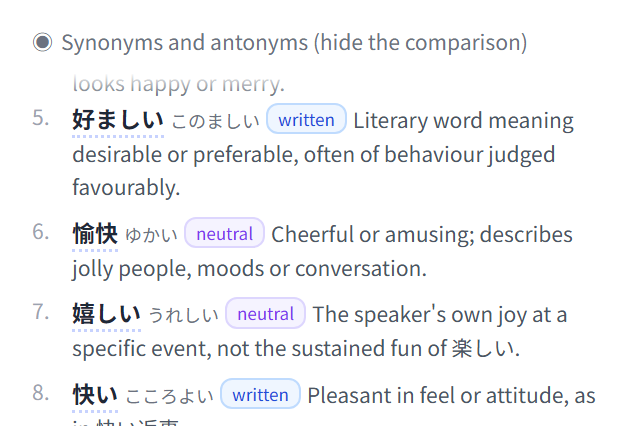
Tomoshi is built for producing Japanese, not just decoding it: paired transitive and intransitive verbs, which kanji spelling to use, how near-synonyms differ, and AI explanations that read the context.
Android
Scan it with your Android phone to install, or search for “Tomoshi” on Google Play.
iOS
Scan it with your iPhone or iPad camera to install, or search for “Tomoshi” in the App Store.
Installed from the App Store.
Installed from Google Play.
Core lookup runs fully offline. Select Japanese in your browser to look it up.

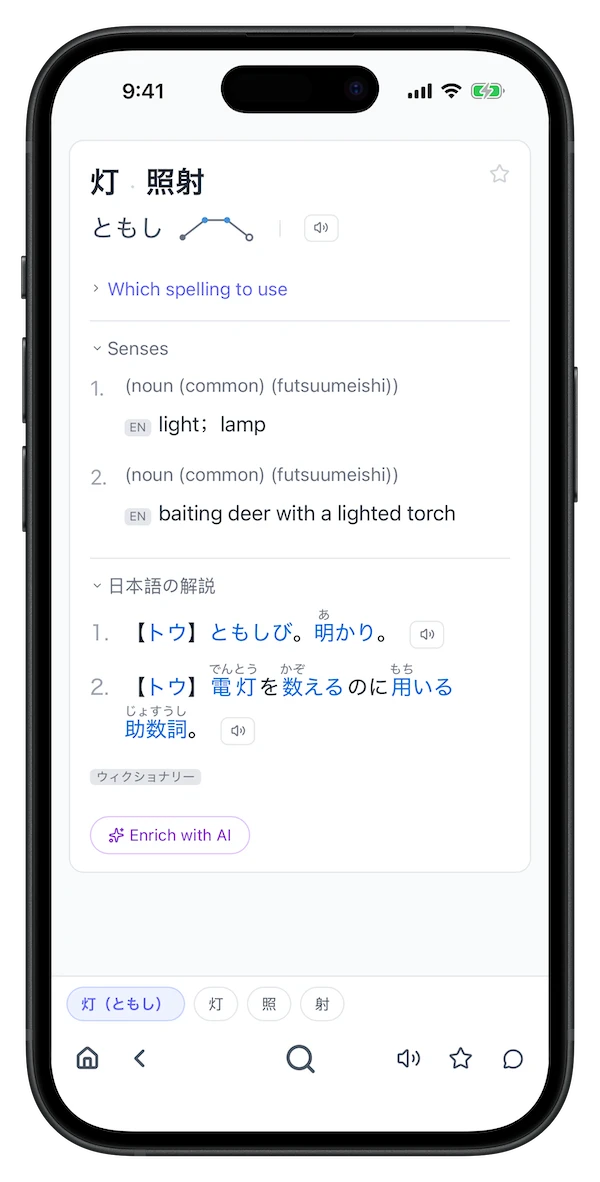
Almost every Japanese dictionary is built for reading — look a word up, drill vocabulary, pass the test. But once Japanese enters your work and your daily life, and you have to say it out loud, or write an email that lands, you need a different kind of help.
That is the stage Tomoshi is built for.
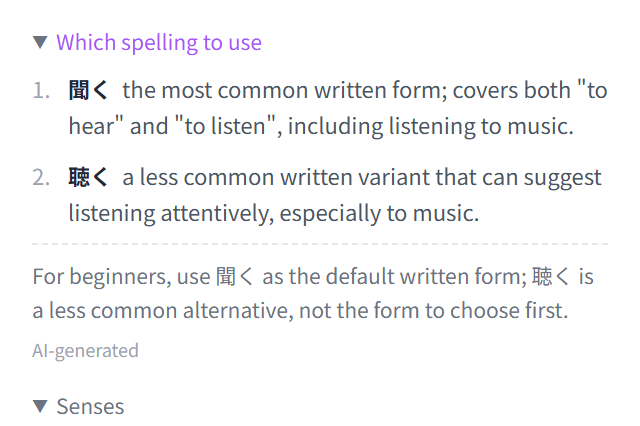
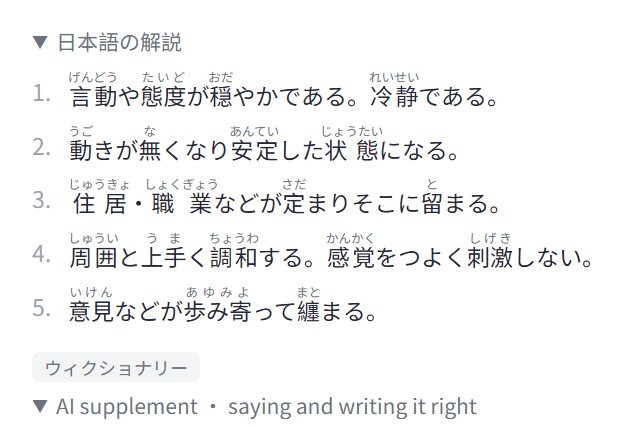
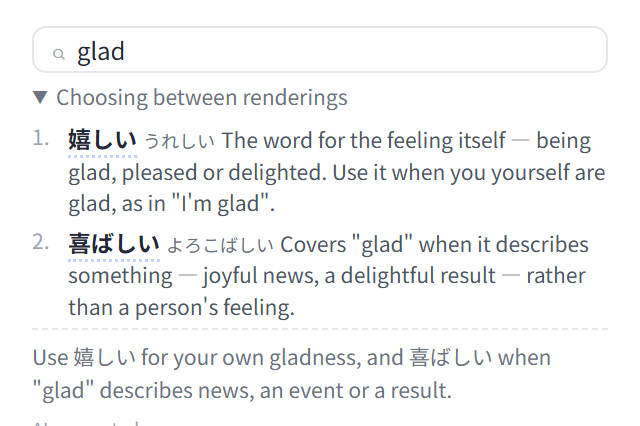
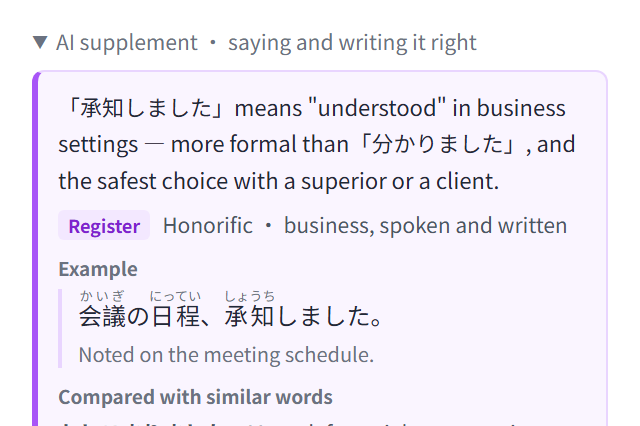
Output tuned to the context. Example sentences are segmented for you with readings attached; tap any word to jump to its dictionary entry, or save it to your word list for review.
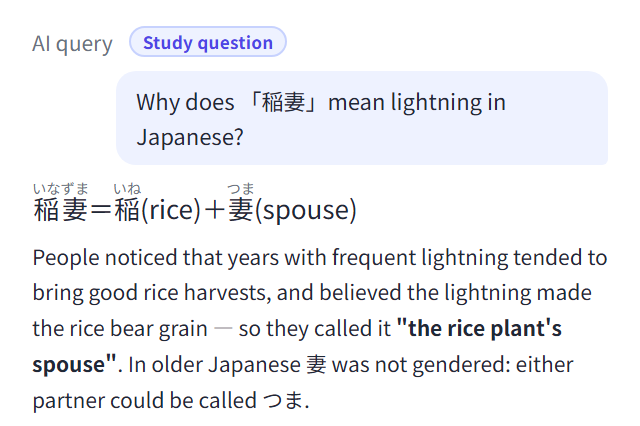
More than a translation: it takes the grammar and set phrases apart, and spells out the register and where the sentence fits.
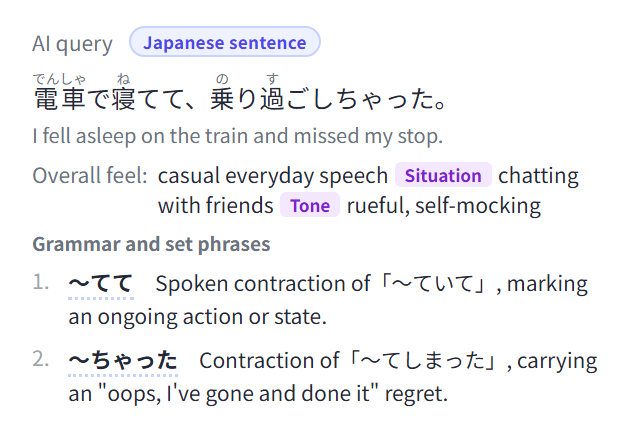
Grammar, usage, nuance, even etymology and cultural background — ask the moment something does not add up.
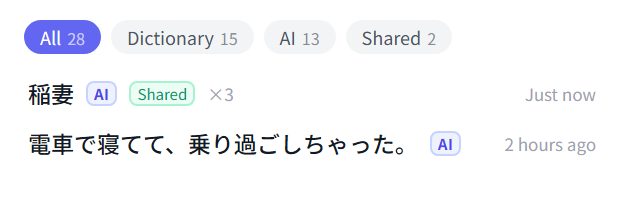
Save entries and AI answers to your word list. Reviews are scheduled by FSRS, the open-source algorithm Anki uses, and words graduate once you know them. Export the whole list to Anki any time.
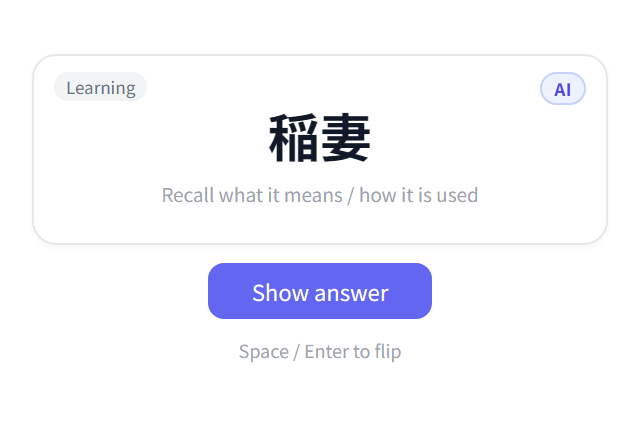
* Screenshots illustrate the features; the shipping interface may differ.
The dictionary and its indexes sit on your own machine: lookups come back instantly, with nothing to load, and keep working offline.
* AI explanations and speech are cloud features and are unavailable offline.
Select Japanese anywhere in your browser and the entry appears on the spot. Read news, documents and email without breaking your flow.
* Browser lookup requires the desktop app.
Local lookups are never uploaded, never leave your device, and build no profile. No account to create.
* Cloud features need no account either, and the server keeps no link between a query and you; IP addresses are used only for abuse rate limiting and kept for at most 2 hours.
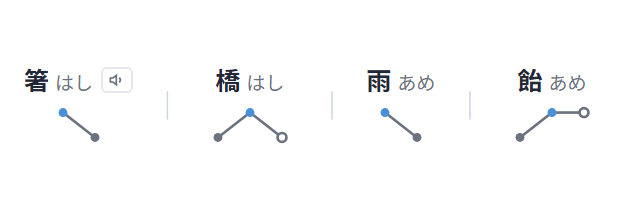
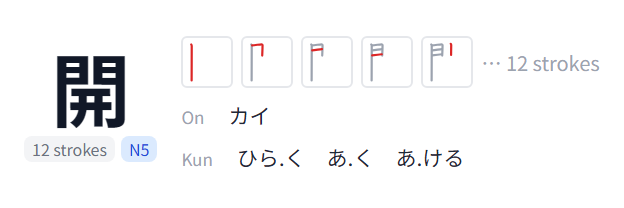
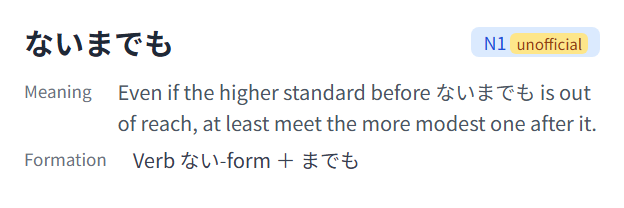
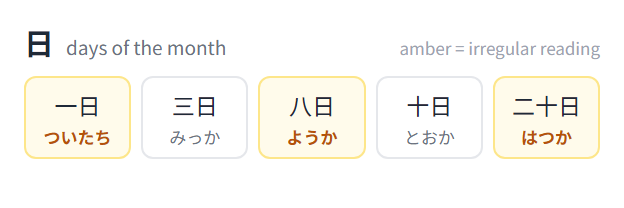
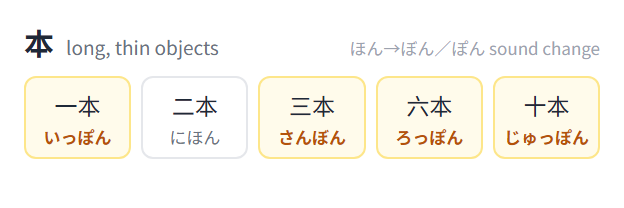
Core definitions come from JMdict and other open projects the global learning community has been checking for years. The data that sets Tomoshi apart — transitive/intransitive pairing, nuance notes, kanji spelling comparisons, English-to-Japanese reverse lookup — is built with AI assistance and cross-checked across several models.
The browser extension is open source under AGPL-3.0 — the part that has to read the page, and is therefore the most privacy-sensitive, is code you can read yourself; and whether the desktop app really is offline you can check with a firewall or a packet capture.
Lookup is free forever: the full dictionary data, offline lookup and select-to-look-up in the browser — free now, and free later.
AI explanations and cloud speech are free to use today, within a daily quota. Every call has a real server cost behind it, which I currently cover myself; if the user base grows to the point where I can no longer cover the server and AI costs, they may become paid to balance those costs.
Said up front. No free-then-harvest.
Core lookup works entirely offline. Free to download, no account required.
Android
Scan it with your Android phone to install, or search for “Tomoshi” on Google Play.
iOS
Scan it with your iPhone or iPad camera to install, or search for “Tomoshi” in the App Store.
Installed from the App Store.
Installed from Google Play.